
You're staring at the numbers on a Friday afternoon, and they don't line up. The bank balance says one thing, the invoices say another, and now the Florida sales tax return is due before you've even caught your breath. That's usually when a Jacksonville owner realizes florida sales tax filing isn't a clerical task, it's a compliance system that can bite if nobody is watching the details.
The problem isn't just the form. It's the county surtax you missed, the customer address that was coded wrong, the return that sat too long, and the fact that most small businesses never build a real process around tax collection, bookkeeping, and deadline control. That's why owners get into trouble, and why a fractional CFO plus disciplined bookkeeping solves more than the tax form ever will.
Why Florida Sales Tax Filing Trips Up So Many Business Owners
A lot of owners don't panic about sales tax until they're already behind. I've seen it in Jacksonville more times than I can count. The books looked “close enough” on paper, then the owner noticed the tax liability report didn't match the cash in the bank, the county surtax hadn't been picked up, and the filing window was already closing.
That's the trap. Florida's 6% state sales tax can be pushed higher by county discretionary surtaxes of 0.5% to 2%, which can move the combined rate to 8% depending on location, and the filing deadline comes fast because returns are due on the 1st of the month following the reporting period and aren't late until after the 20th (Florida Department of Revenue, Avalara guide to Florida sales tax deadlines). That's not much time if your books are messy.
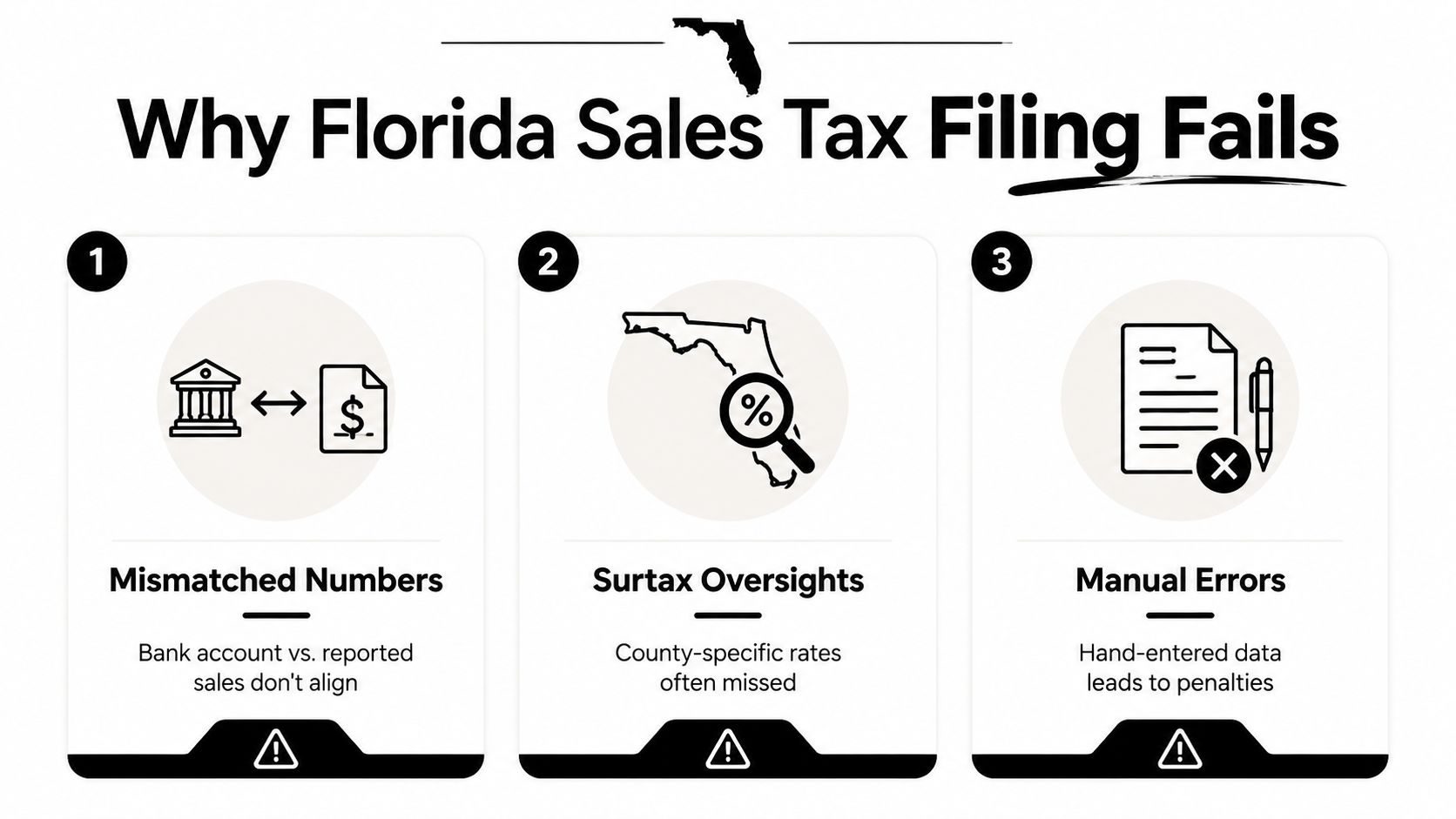
The three mistakes I see over and over
Practical rule: if your bookkeeping isn't current, your sales tax return is probably wrong too.
First, owners mix up bank deposits and taxable sales. A deposit can include nontaxable revenue, refunds, or prior-period collections, so the bank never tells the whole story. Second, they miss the county surtax because they set up the state rate once and never revisit it when the delivery address changes.
Third, they try to fix it by hand at the end of the month. That's where errors multiply. Manual entry turns a routine filing into a penalty risk, especially when nobody has a weekly review habit.
A good fractional CFO doesn't just “look at the numbers.” They make sure the sales tax process is part of the broader compliance picture, so the owner isn't rebuilding the return from scratch every filing cycle. If your phones are ringing off the hook and your staff can't answer filing questions, a service like automated phone answering for CPAs can help keep routine client communication moving while the important work gets done.
Most small businesses don't fail at Florida sales tax because they're careless. They fail because nobody owns the system. That's the gap a hands-on bookkeeping team closes before the state starts charging for the mistake.
Registering with the Florida Department of Revenue
Before you collect a dime of Florida sales tax, you need the account set up correctly. The state wants the right legal name, the right tax identifier, and the right business activity from day one. If you rush this part, you usually end up fixing the account later, which is a waste of time and usually means more cleanup in the books too.
What to gather before you apply
For registration, get these items together first:
- Legal business name exactly as it appears on formation records
- FEIN or Social Security number if you're a sole proprietor
- Physical address and mailing address
- Clear description of business activities
- Honest estimate of expected sales tax liability
That estimate matters more than most owners think. It helps the state place the account in the right filing cadence, and it gives your accounting team a starting point for compliance tracking. If you're unsure what to provide, a sales tax consultation is a smart place to start, especially if you want someone to sanity-check the setup before you file anything. This Florida sales tax consultation guide is the kind of resource that helps owners avoid basic setup mistakes.
Sales tax account or use tax account
Don't blur taxable sales and taxable purchases. A sales tax account is for collecting tax on taxable sales you make to customers. A use tax account is for situations where you bring goods into Florida for use in the business and sales tax wasn't paid the way it should have been.
If the registration is wrong, every return after it starts from a bad foundation.
Registration is free and done online through the Florida Department of Revenue. Once the account is approved, the business gets a certificate of registration, and that's what gives you the legal right to collect and remit Florida sales tax. Don't start collecting before that paperwork is in place. That's a sloppy habit that turns into a real compliance problem fast.
If you keep your books in QuickBooks, the setup should match the registration exactly. That's where a CPA or bookkeeping partner earns their keep, because clean registration data is what keeps the rest of the filing cycle sane.
Understanding Nexus and What Counts as Taxable
Many business owners are surprised. They assume sales tax only applies if they have a physical location in Florida. This view is too limited. Florida focuses on nexus, which has several forms.
Physical nexus and economic nexus
Physical nexus is straightforward. If you have a storefront, warehouse, employees, or inventory in Florida, you've got tax obligations tied to that presence. Economic nexus is different, and it matters for remote sellers. Florida requires businesses with more than $100,000 in taxable remote sales in the previous calendar year to register for a sales tax permit, even without a physical presence in the state (Florida Department of Revenue sales tax page, Florida sales tax filing guide).
That's a real trigger, not a suggestion. If your online sales into Florida cross that line, you need to register and collect. Waiting until year-end to “see how it goes” is how people end up behind.
What's taxable and what isn't
The general rule is simple. Tangible personal property is taxable. Most services aren't, but industry exceptions matter, and construction labor or other specific activities can change the answer. Don't guess at this by category name alone. Look at the actual transaction.
Florida also layers tax rates by location. The state rate is 6%, and county surtaxes run 0.5% to 2%, which can push the combined rate to 8% depending on the delivery address (Florida Department of Revenue). That means the right rate isn't just your home county. It depends on where the sale lands.
| Florida Sales Tax Filing Frequencies by Annual Liability | Assigned Frequency | Typical Use Case |
|---|---|---|
| Higher liability | Monthly | Larger sellers with more frequent remittance |
| Moderate liability | Quarterly | Mid-sized accounts with steadier collections |
| Lower or seasonal liability | Semiannual | Smaller or seasonal filers |
| Lowest liability | Annual | Small accounts with limited tax collected |
If you're unsure whether a sale is taxable, stop and verify before you invoice. Retrofitting tax after the fact is always messier than getting it right at the point of sale.
Setting Up Sales Tax Collection in QuickBooks
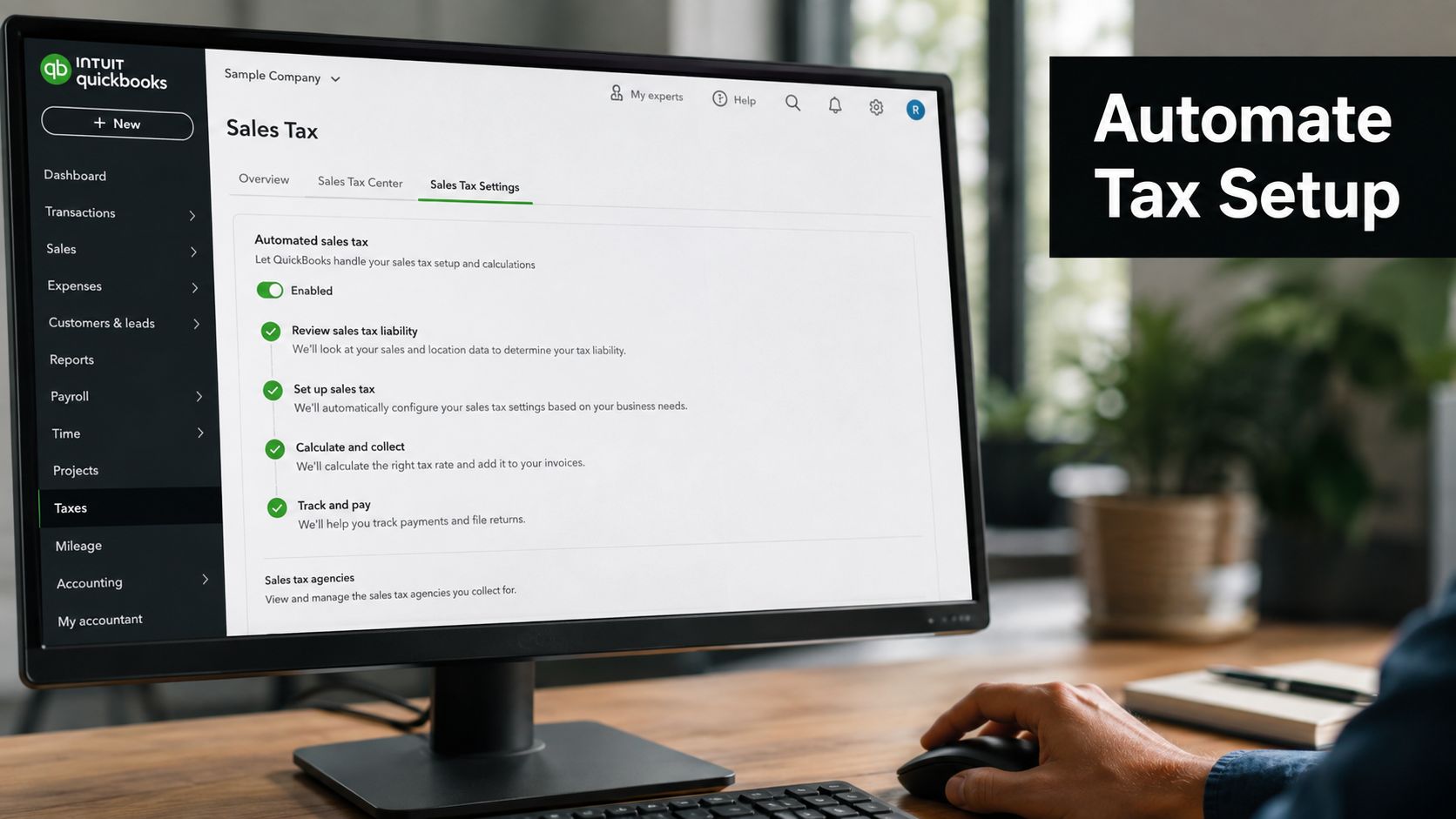
If you're still tracking Florida sales tax in spreadsheets, you're making extra work for yourself every single filing period. QuickBooks can do the heavy lifting, but only if it's set up correctly. The goal is simple, let the system calculate the right rate, track taxable versus exempt activity, and give you a clean liability report before the deadline creeps up.
Build the tax structure before you invoice
Start by creating a sales tax item for the Florida state rate. Then add separate items for each county surtax area you deliver into, because that's where owners usually go wrong. If your team ships into multiple Florida jurisdictions, the software has to know which customer or class gets which combined rate.
That setup matters because QuickBooks can track taxable and nontaxable sales by customer and product, which makes the DR-15 numbers much easier to pull at period end. A sloppy chart of accounts turns the return into a reconstruction project. A clean one turns it into a review.
If your chart is still a mess, this QuickBooks chart of accounts setup guide is worth using before you book another sale.
Keep an eye on the liability report
Run the sales tax liability report weekly, not just at month-end. That gives you a running view of what you owe and keeps the 20th from turning into a surprise. If the report is off, fix the coding now, not after the return is already submitted.
You don't need fancy software tricks here. You need discipline. QuickBooks is only as good as the person setting up the items, checking the rates, and reviewing the report. That's why bookkeeping support matters, because the software won't catch a bad setup on its own.
Filing Frequencies, Deadlines, and the E-File Workflow
Florida doesn't give every business the same filing rhythm. The state assigns filing frequency based on how much tax you collect, so larger filers end up on a more frequent cycle, and smaller accounts may file quarterly, semiannual, or annual. The wrong assumption here causes trouble because owners hear “sales tax” and think every account works the same way.
Know your deadline and your form
Florida sales and use tax returns are generally due on the 1st day of the month following the reporting period and become late after the 20th of that month, with the deadline moving to the next business day if the 20th falls on a weekend or legal holiday (Florida Department of Revenue, Avalara guide). That filing window is tight enough to matter in real life. If your books aren't current, you can miss the deadline without meaning to.
Use Form DR-15 for standard returns and Form DR-15EZ for simplified filing. The choice depends on the complexity of the filing. If you have surtax detail to report, don't try to squeeze it into a form that doesn't fit.
The actual workflow is two steps
Florida's e-file process is not just “hit submit and move on.” You report the return first, then remit payment through the Department of Revenue's e-file system (Florida DOR eFilePay tutorial). If you stop halfway through, you haven't filed correctly.
Keep this straight: a submitted return and a successful payment are not the same thing.
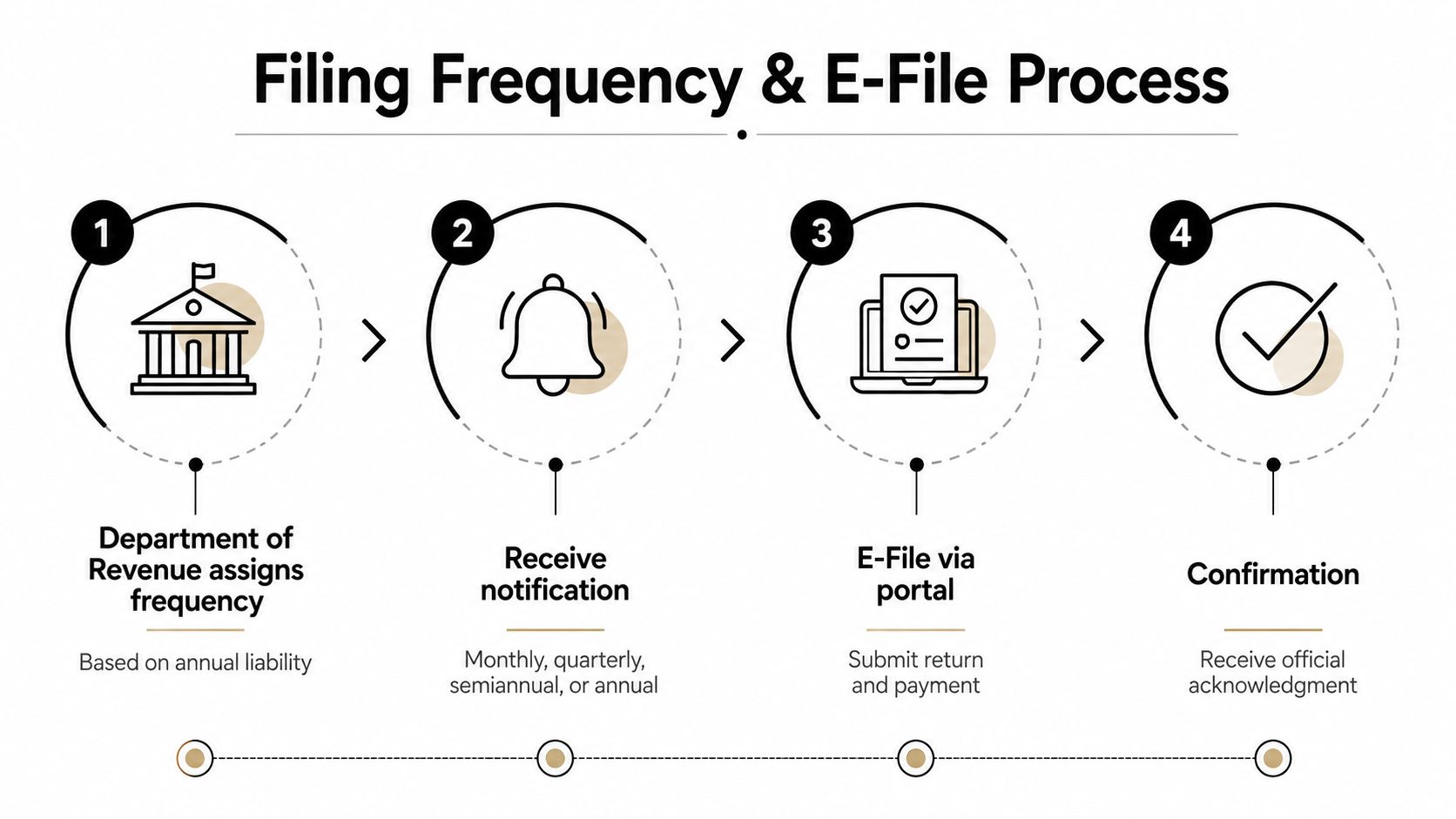
Once the filing is in, save the confirmation. That acknowledgment is the proof you want when somebody later asks whether the return went through. Owners who keep a clean digital trail sleep better, and their CPA spends less time chasing ghosts at month-end.
If you want the process to be boring, predictable, and on time, the answer is not more scrambling. It's a calendar, a clean QuickBooks setup, and someone who checks the return before it goes out.
Exemptions, Amended Returns, and Handling Penalties
This is the part of Florida sales tax filing that causes the most second-guessing after the fact. Owners discover they forgot a resale certificate, treated an exempt customer like a taxable one, or put the wrong rate on a transaction and now need to clean it up. That cleanup is fixable, but only if someone notices the problem early.
Exempt sales need proof
The usual exemption categories are straightforward enough if you keep records. Sales for resale need a valid resale certificate. Sales to exempt organizations need support too. Florida also has specific statutory exemptions for items like groceries, most medical supplies, and certain agricultural inputs, but none of that matters if you can't document why the sale was exempt.
Don't wing it. If the exemption certificate isn't collected and retained, the exemption isn't really defended. That's the part business owners hate to hear, but it's true.
Fixing a mistake the right way
If you find an error after filing, use Form DR-15AR to amend the return. If you've overpaid, there's a 60-day window for reporting the overpayment, so don't let a correction sit on a desk while everyone hopes it disappears.
A local retail client once came in convinced the return was “close enough.” It wasn't. The exemption file was incomplete, the filing was late, and the penalty notices had already started. We cleaned it up, but the owner would've saved money by having someone review the return before it went out.
Penalties are a bookkeeping problem first
Late filing, late payment, and negligence penalties stack up fast. They're not random. They usually happen because nobody is watching the calendar, nobody is reviewing exemptions, and nobody is reconciling the tax liability report to the books before the deadline.
If you want to see what a formal compliance process looks like, these sales tax compliance services are the kind of support that keeps the mess from growing. The right process doesn't eliminate mistakes completely, but it cuts down the avoidable ones.
Staying Compliant and Why a Fractional CFO Pays for Itself
Florida sales tax filing is only one piece of the compliance puzzle. Payroll, income tax, 1099s, and industry-specific reporting all sit on the same desk, and most small businesses in Jacksonville don't have one person whose full-time job is to keep that stack under control. That's where a fractional CFO earns real value, because strategic oversight catches problems before they turn into tax notices.

Keep the books clean, then layer on oversight
If your QuickBooks file is sloppy, no CFO can rescue the return efficiently. Clean bookkeeping comes first, then review, then filing. That's why owners need both a bookkeeping partner and a senior financial guide who sees the whole picture instead of one deadline at a time.
Automation can help, but only if it's set up with care. If you're evaluating tools, accounting automation software features can show you what modern workflow support looks like, especially when you're trying to cut manual entry and reduce missed details.
Bookkeeping and Accounting of Florida Inc. handles sales tax compliance services along with broader accounting support, which matters because sales tax rarely shows up alone. It shows up with cash flow questions, payroll timing, and messy records.
Bottom line: a fractional CFO and solid bookkeeping are not luxuries. They're how small businesses stay compliant without living in panic mode.
If you want to stop reacting and start running the business like it's supposed to be run, tighten your QuickBooks setup this week, pull every resale certificate you're missing, and sit down with a CPA who knows Northeast Florida compliance. That's the move that keeps the next filing from becoming another fire drill.
Bookkeeping and Accounting of Florida Inc. helps Jacksonville and Northeast Florida businesses keep clean books, manage Florida sales tax filing, and stay ahead of compliance deadlines with practical CPA support. If you want a team that can handle bookkeeping, sales tax, and fractional CFO oversight in one place, visit Bookkeeping and Accounting of Florida Inc. and set up a conversation.