
You can run a solid business in Jacksonville and still get blindsided by sales tax. One new online channel, one remote hire, or one warehouse move, and suddenly your books are dealing with a different state's rules, a different filing schedule, and a different audit risk. That's why a sales tax accountant isn't a back-office clerk, it's the person who keeps your growth from turning into a compliance mess.
Thank you for reading this post, don't forget to subscribe!For growing companies, sales tax is not a simple line item. It's a moving target tied to where you sell, where you store inventory, where your people work, and how your invoices are coded. A seasoned CPA who understands sales tax acts like a fractional CFO for this part of the business, watching the rules, the systems, and the filings so you don't have to learn the hard way.
When Your Business Growth Creates a Tax Problem
The trouble usually starts when the business is winning. A construction company in Jacksonville adds an online store for custom fixtures, and orders start flowing in from neighboring states. A clinic begins selling specialty products, or a retail shop expands onto a marketplace and suddenly has customers in places the owner never thought about before.
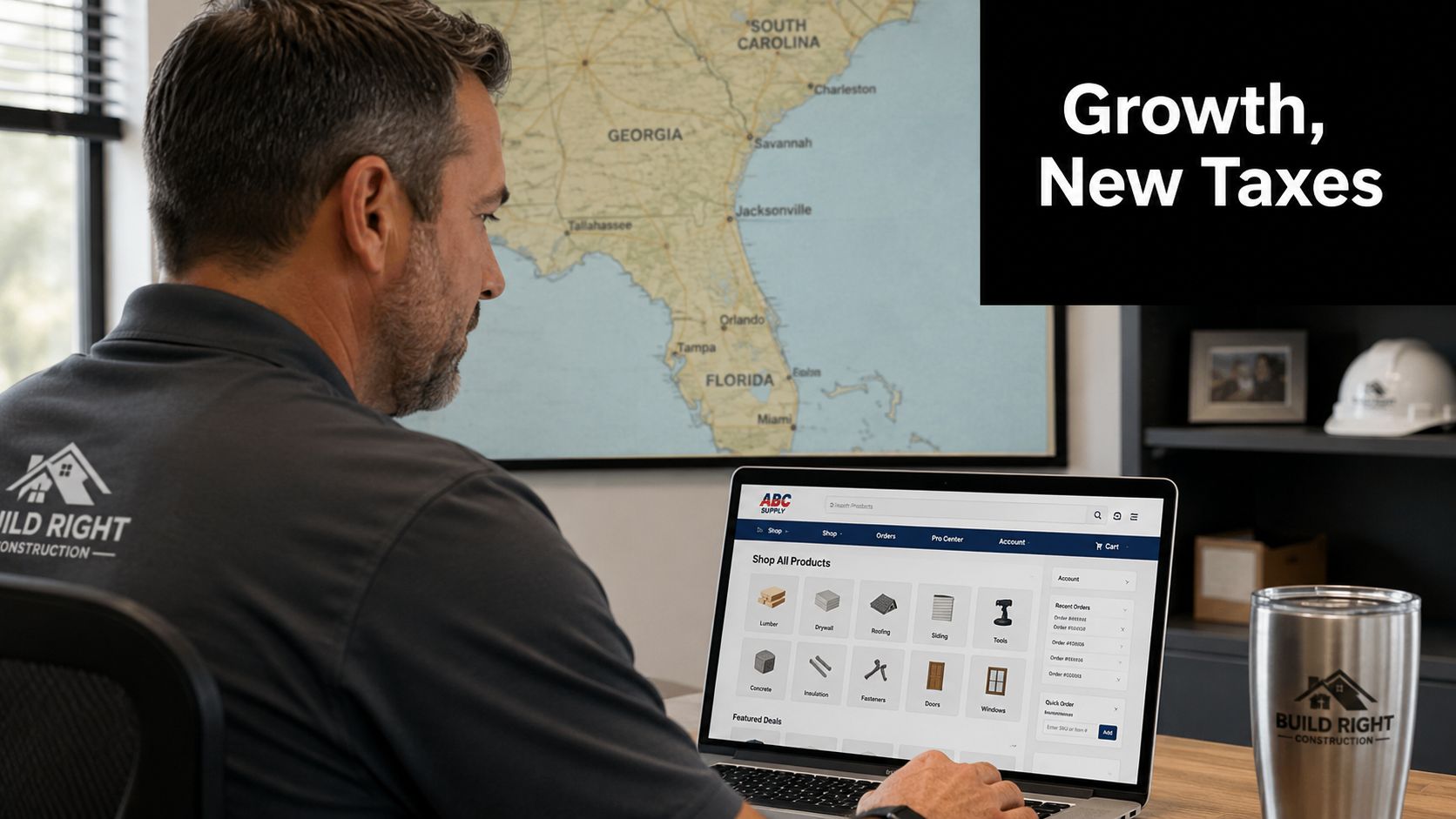
That's where a sales tax accountant earns the seat at the table. This role is built for multi-state compliance, audit defense, and tax planning, and the pay reflects how specialized the work is, with average annual salary data at $82,406 versus a median $81,680 for accountants and auditors overall, according to the role and labor data cited in the source brief (Velvet Jobs). The point is simple, once a business crosses state lines, even digitally, the tax problem stops being bookkeeping and starts being strategy.
What that means for owners
A business can grow faster than its tax setup. That gap is where mistakes live.
The best way to think about this role is as a financial guide, not a filer. A competent sales tax accountant looks at transactions, exemptions, registrations, and reporting before the first bad filing hits your desk. That is exactly the kind of support a busy owner needs when the business is expanding faster than internal controls.
A local Jacksonville owner doesn't need more guesswork. They need someone who can connect the dots between revenue growth, tax registration, and filing obligations before the state does.
Understanding Sales Tax Nexus in Florida and Beyond
A Jacksonville business can grow into a tax mess without changing its storefront. One new warehouse, one remote employee, or one online sales channel can create a filing duty in another state. Nexus is the rule that decides when that happens.
For Northeast Florida businesses, the local rate still matters first. Florida's state sales tax rate is 6%, and counties can add a discretionary sales surtax of up to 2.5%, so the total can change by location, as outlined in this Florida sales tax guide. If your team is coding tax by hand or assuming every Florida sale uses the same rate, you are setting up avoidable mistakes.
A sales tax accountant treats nexus as a control issue, not a filing detail. The job is to spot where your sales, staff, inventory, and registrations create exposure before the state sends a notice. That is the same practical mindset a fractional CFO brings to compliance, cash flow, and risk.
The main nexus triggers
- Physical Presence: An office, warehouse, inventory, or employee in a state can create a tax connection.
- Economic Nexus: Enough sales into another state can create tax duties even without a local office.
- Affiliate Nexus: Related entities inside a state can pull your business into that state's filing rules.
- Click-Through Nexus: Referral relationships tied to in-state websites can create a filing obligation.
- Florida Specifics: Florida rules still control taxability, rate lookup, and local surtax application.
Rate lookup matters because the tax is tied to the jurisdiction, not just the state name on the invoice. For Jacksonville sellers, Duval County is not a copy-and-paste task, and the same problem shows up every time you expand into a new market or change how orders are fulfilled.
If you want a practical starting point for review, a focused sales tax consultation can show where registrations, filings, and cleanup are already behind. A guide to employment risk and compliance is useful reading for owners who also use remote staff and want to see how compliance gaps spread across the business.
Practical rule: if your sales channels, staff, or inventory footprint changed, assume your nexus profile changed too.
How a Sales Tax Accountant Actively Protects Your Business
A real sales tax accountant does a lot more than file returns. The work starts with setup, where the accounting system, POS software, and tax codes have to match how the business sells, bills, and ships. If those rules are wrong from the start, every invoice after that carries the same mistake.
Growing Jacksonville businesses run into tax trouble when the business changes faster than the books do. You add online sales, hire remote staff, move inventory, or start serving customers in new places, and suddenly the tax setup no longer matches the operation. A sales tax accountant spots those changes early and adjusts the system before the errors spread into filings, notices, and audit exposure. That same discipline also supports broader business controls, which is why owners who want a wider view of risk should read the guide to employment risk and compliance.
Employers know this is not entry-level work. Job postings commonly expect 1 to 3 years of direct sales and use tax experience in a multi-state environment because the role has to handle different rules, deadlines, and filing requirements (Indeed). That experience matters when you are dealing with registrations, notices, exemption handling, and return frequency.
What the specialist actually handles
A good accountant checks whether your records are ready before month-end closes. They reconcile sales by jurisdiction, make sure the tax setup in QuickBooks or your POS system matches the taxable base, and keep track of filings that may be monthly, quarterly, or annual depending on the entity and the state.
They also step in when the letters start showing up. A notice from a tax authority is a warning that something in the setup, coding, or remittance process needs review. A fractional CFO mindset matters here, because the goal is not just clean filings today, it is stopping the same error from showing up again next quarter.
Clean books are not enough if the tax logic behind them is wrong.
Construction businesses feel this pain fast. Materials, labor, and job-costing can all interact with tax in ways owners do not see until a filing or audit exposes the mistake. The fix is not more manual patching. It is a specialist who builds controls around the transaction flow, keeps the records audit-ready, and connects sales tax work to the same fractional CFO and accounting services that protect cash flow and reduce avoidable surprises.
Common Sales Tax Mistakes Jacksonville Businesses Make

A Jacksonville business usually does not get into sales tax trouble because the owner ignores the rules on purpose. The trouble starts when the business grows faster than the tax setup behind it. A contractor in St. Johns County changes the way jobs are billed and handles labor the wrong way. An e-commerce boutique in Riverside starts shipping into new states and does not realize that the added footprint can create new registration needs. A remote hire or a new sales channel can do the same thing.
Three patterns I see too often
- Construction confusion: Owners tax the wrong part of a real property improvement job or fail to track taxable materials cleanly.
- E-commerce expansion: Online sales into new states create obligations the owner never planned for.
- Healthcare mismatch: A practice applies tax where it does not belong, or misses tax where a product sale is taxable.
The pattern is always the same. Business owners change how they sell, where they ship, or who they hire, then leave the tax setup untouched. That is how a clean-looking set of books turns into a problem at filing time, especially when the business starts selling through marketplaces or working with remote staff (Woodard). The rules do not sit still, so your compliance process cannot sit still either.
Florida adds its own wrinkle because the state taxes a narrower set of services than many owners expect. Under Florida guidance, a pure service sale is generally treated differently from a sale of tangible goods, which means the way you separate products and services in your system matters. If you blur that line, you can overcollect tax from customers, undercollect what you owe, or both. The Florida Department of Revenue explains the state rules directly, and a clear summary is also available in this practical guide to Florida sales tax.
A sales tax accountant should catch these mistakes before they turn into notices. That is the fractional CFO mindset in plain English. The job is not only to file returns, it is to tighten the process, clean up the coding, and connect sales tax compliance to the same accounting controls that protect cash flow. If you want a practical way to vet that help, use this checklist for finding a good accountant, and if you need outside protection for professional mistakes, Find E&O insurance with Select Insurance Group.
Hiring the Right Accountant A Practical Checklist
A sales tax accountant should be able to explain the rules without hiding behind jargon. If they can't, keep looking. A qualified candidate in Florida typically has a bachelor's degree in Accounting or a related field and at least 3 years of corporate tax experience, which tells you this is a serious technical role, not just admin support (Indeed).

Questions to ask before you hire
- Experience: What sales and use tax work have you handled in multi-state environments?
- Industry knowledge: Have you worked with construction, healthcare, retail, or e-commerce?
- Nexus review process: How do you identify where the business may need to register?
- Technology: What do you use for exemption tracking, jurisdiction mapping, and tax setup?
- Communication: How fast do you respond when a notice or filing issue comes up?
- Fees: What is included, filings, cleanup, registrations, notices, or planning?
- References: Who can confirm the quality of your work?
A few red flags matter more than price. Vague answers about filings, no clear process for nexus cleanup, and weak familiarity with Florida rules are all signs to walk away. If a provider can't explain how they handle multi-state work, they're not protecting your business, they're guessing with it.
If you want to compare service models, read this guide on how to find a good accountant. It's the kind of check that helps owners separate a true compliance partner from a generalist who only handles the easy parts.
One more thing, errors in tax work can spill into liability issues, which is why many firms also look at E&O insurance for accountants as part of their professional risk management. That doesn't replace skill, but it does show how seriously the profession treats the downside of mistakes.
Take Control of Your Sales Tax Compliance Today
Sales tax is not a do-it-yourself project once your business starts growing. The rules change by state, the rate can change by jurisdiction, and your filing burden changes when your operations change. A stale setup is how owners end up with penalties, interest, and a stack of notices they don't have time to sort through.
The smarter move is to treat sales tax like a core finance function. That means getting a specialist involved before the problem grows, not after the state sends a letter. If you want a plain-English overview of the process, review managing sales tax obligations and compare it with what your business is doing today.
For owners who need a clean process, the right support usually includes nexus review, registration cleanup, return filing, tax setup, and recordkeeping controls. Those are the same building blocks covered in sales tax compliance services, and they matter because small businesses rarely know every rule they're expected to follow.
Bookkeeping catches history. A sales tax accountant protects what happens next. That's the difference between reacting to problems and running the business with a fractional CFO-level view of risk, cash flow, and compliance.
A CTA for Bookkeeping and Accounting of Florida Inc.. Schedule a consultation with our Jacksonville CPA team if you need sales tax cleanup, nexus review, filing support, or a stronger compliance process before the next deadline lands on your desk.